

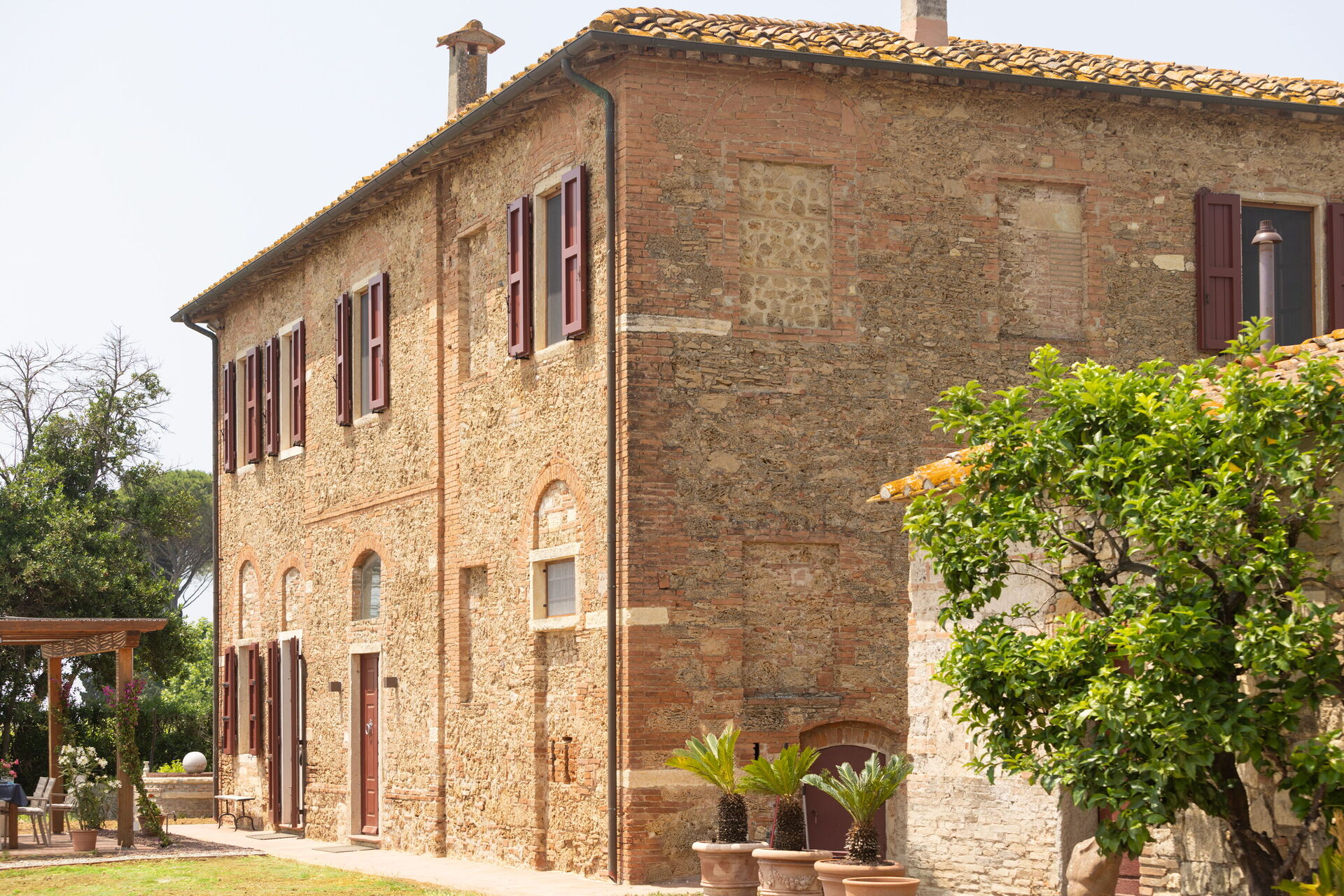
A house with a long memory.
From the eighteenth-century farmhouses of Collemezzano to a parish church inaugurated in 1859, the story of Villa Leone Reale runs through more than a thousand years of Tuscan record.
A traditional
Tuscan estate.
Villa Leone Reale stands in Collemezzano, above the coastal town of Cecina, in the Maremma Livornese — a stretch of southern Tuscany historically marked by olive groves, vineyards and farmhouses, many of which date back to the 18th and 19th centuries.
The villa belongs to that older landscape. Its thick stone walls, terracotta tiles and arched loggias are the vocabulary of a working country estate; lovingly restored, they balance rustic character with modern comfort.
The Royal Lion.
The villa takes its name from the Royal Lion — a nod to the regal countryside lifestyle, and to the noble simplicity of this region's historical villas.
In the heraldry of Tuscany the lion has long been a recurring presence: civic crests, family arms, country-house lintels. Here the name evokes that older tradition; the house, in its quiet way, carries it.
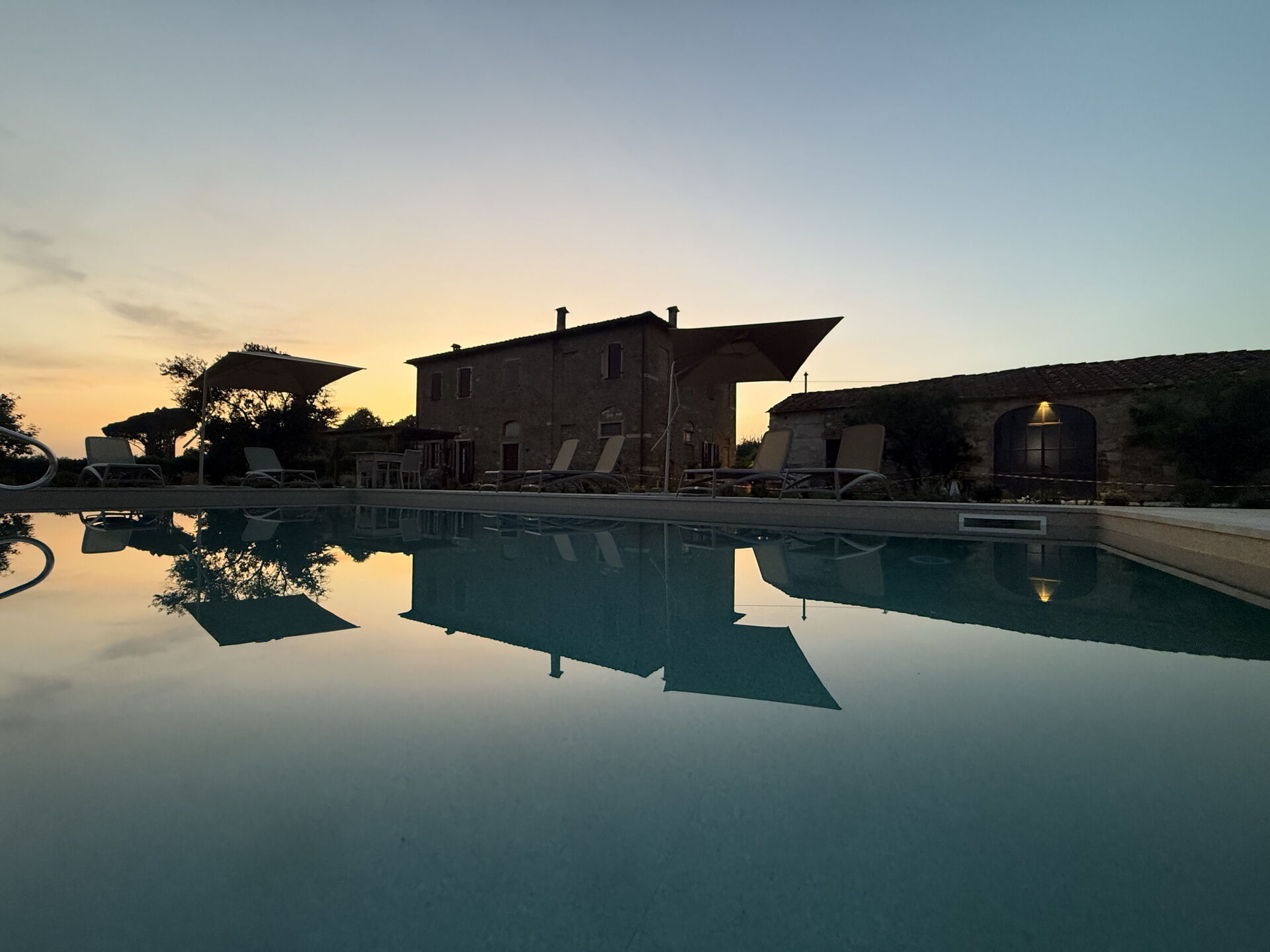
A small hilltop, long on the map.
Collemezzano sits at approximately seventy metres above the plain. The 19th-century historian Emanuele Repetti described it as "a central, healthy and charming point in the plain", connected by the postal and royal roads of the Maremma.
It remains small and quiet. The 2011 census recorded fourteen residents in Collemezzano proper, and roughly eight hundred and sixty inhabitants across the broader territory, including the hamlet of Pacchione.
More than a thousand years.
The first known mention of Collemezzano: a land swap recorded between the Bishop of Pisa and a priest named Stefano. From here on, the locale enters the written record.
The Church of San Lorenzo is mentioned in two Pisan ecclesiastical records, anchoring the area's religious life in the 11th century.
A papal bull from Pope Paschal II confirms Collemezzano's ecclesiastical allegiance to the abbey of Moxi alle Badie, near Castellina Marittima.
The naturalist Giovanni Targioni Tozzetti, on his travels through the region, notes ruins across the landscape — suggesting an earlier population density now thinned by time.
The Chiesa di Sant'Antonio is inaugurated, built by the will of Grand Duke Leopold II of Tuscany.
Collemezzano is separated from Riparbella and incorporated into the Comune of Cecina, where it has remained ever since.
A central, healthy and charming point in the plain.
— Emanuele Repetti, 19th century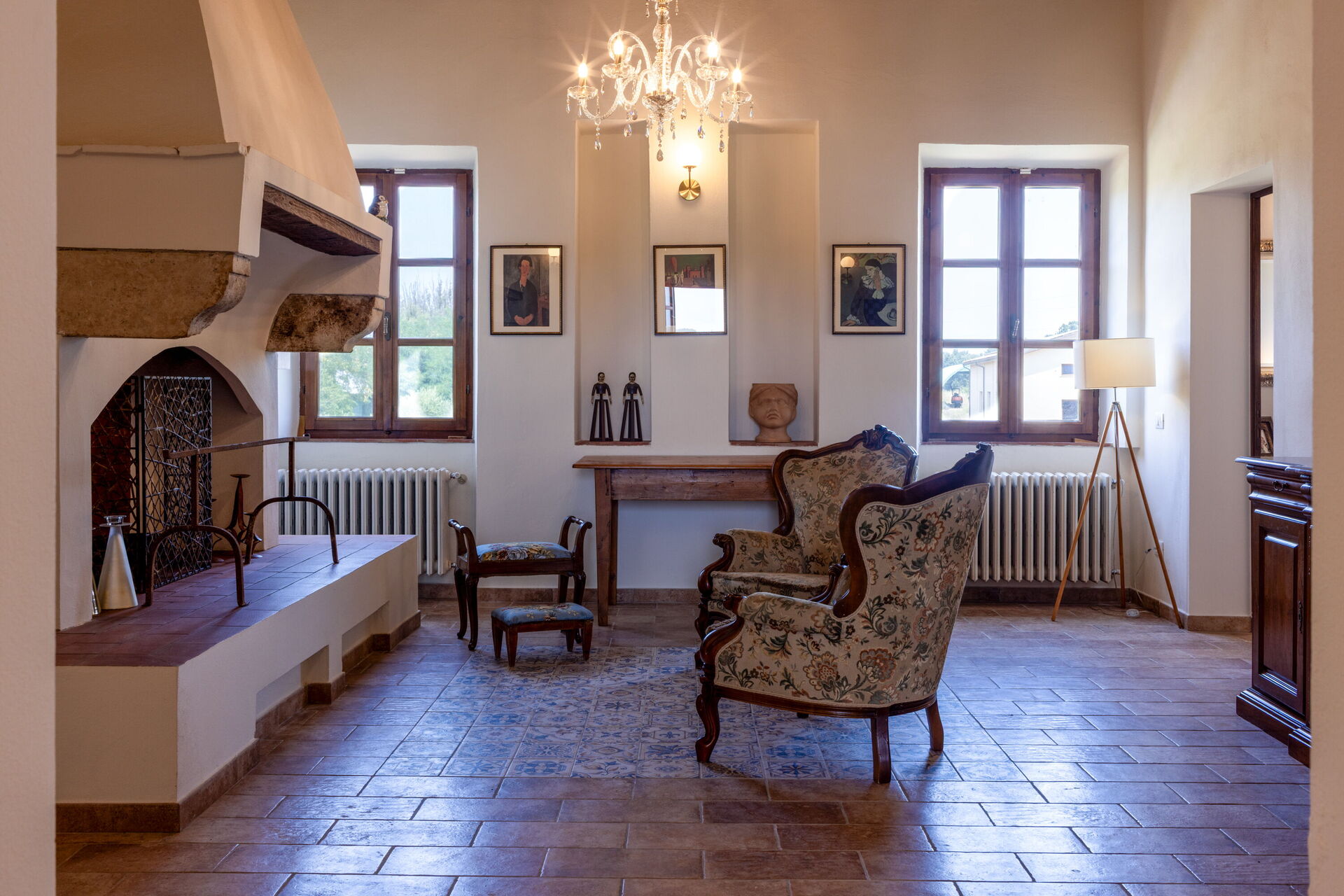
A 19th-century parish, by ducal will.
Built by the will of Grand Duke Leopold II of Tuscany and inaugurated in 1859, the Chiesa di Sant'Antonio remains the parish church of Collemezzano.
Its interior holds a 17th-century Addolorata painting, attributed to the school of Dolci, alongside other works of note and a number of relics donated by the Grand Dukes.
See the house.
A walk through the rooms, the loggia, the gardens, the long view.